Cultivating Diversity In the Classroom
One 抖抈社区 Teacher鈥檚 Approach to Teaching Cultural Diversity
By Julia Pellegrino, Class Teacher, Grade 7/8
鈥�Bringing a focus on diversity, equity and inclusion is important because the world is changing and we need to change with it. As someone who studies and teaches history, it has been incredible to witness the聽way the聽change in thinking about race, gender, class,聽etc聽has impacted how we view events and people of the past. Historical perspective, like technology, is evolving and we must grow our thinking and perceptions along with the rest of society.鈥澛�鈥�

Renewed awareness of the climate of injustice and racial discrimination in the United States has led to the call for change in education, and the Upper Valley Waldorf School is responding. Waldorf schools have been joining educators in schools across the nation in re-examining how to promote cultural diversity and reinforce inclusive education.
抖抈社区 is committed to supporting diversity, equity and inclusion across its curriculum from the youngest to the oldest students. This commitment is part of our core identity, as social renewal is a foundational element in the mission of Waldorf education.
The Association of Waldorf Schools of North America (AWSNA) has identified :
鈥淎s Waldorf educators we hold the dignity of life and the human being at the center of our work. It is our responsibility to bear witness to what is happening in the world, to elevate the voices of marginalized people, to change the course of inequities, and to break down structural prejudice in all forms where it exists, particularly in Waldorf education.鈥�
抖抈社区 is fully accredited through AWSNA, and is committed to upholding these principles. Professional development for all teachers and staff on topics of diversity, equity and inclusion (DEI) has become a regular and integral part of faculty meetings. Faculty study has included discussions on race, gender, trauma, identity, bias, and other related topics.
Every teacher at 抖抈社区 works to deliver a curriculum that is informed by the principles of diversity, equity, and inclusion.
抖抈社区 sixth grade class teacher, Devon Abbey, has been instrumental in bringing a culturally relevant pedagogy to students. As she explains, this is an urgent and timely focus for our students.
鈥淚t is part of our duty as educators to prepare our students to be global citizens when they leave our community. This is especially important because of the non-racially diverse community we live in here in Vermont. Because most of our students are not interacting with people of different races or cultural backgrounds on a daily basis, we must expose them to the stories, histories, ideas, and cultures of people who are different than they are. Understanding can only come about through knowledge and familiarity.鈥�
Using Literature to Teach Cultural Diversity

As an avid reader herself, and a strong proponent of literature as a gateway to learning across subjects, Ms. Abbey has developed a carefully planned diversity reading challenge for middle school students at 抖抈社区. Students have been challenged to read books across twelve different categories of often under-represented communities, such as Race/Ethnicity, Immigration/Refugee, LGBTQ+, Learning Challenges, Mental Health, Disability, and Poverty/Homelessness.
She has found that exposure to diverse literature is a highly effective means for increasing student understanding of differences.
While biographies and non-fiction works are important, Ms. Abbey has chosen fiction as a primary genre for students in this challenge. Research has shown that , which are essential elements in understanding differences in others.

Ms Abbey explains: 鈥淲hen students read fiction, they develop the ability to put themselves in a character鈥檚 shoes and create an understanding of that character that they might not have in their own lives.
鈥淏ooks can be a mirror of a student鈥檚 own story that provides validation of their personal struggles, but books can also be windows into worlds that they would never otherwise experience.鈥�
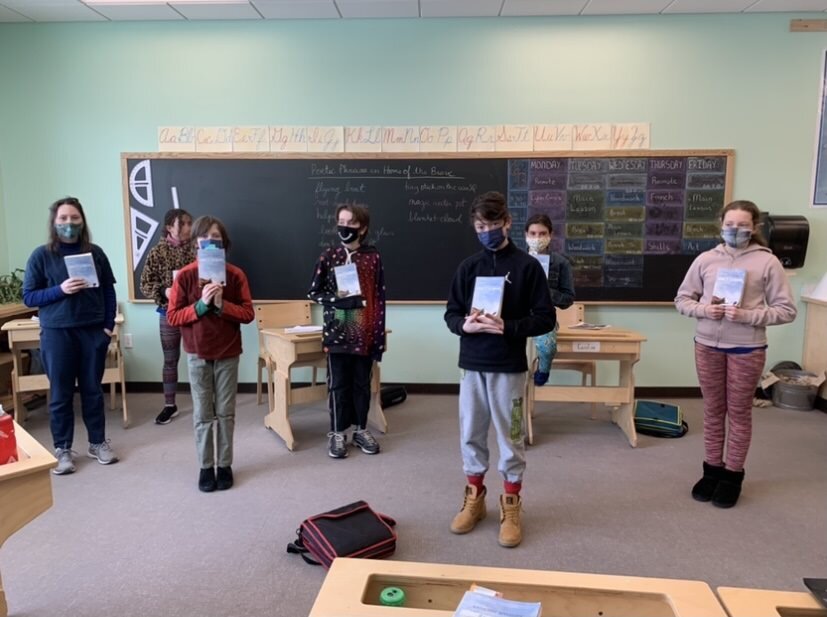
One recent example of fiction opening understanding for her students took place recently when Ms. Abbey used Home of the Brave by Katherine Applegate as a class novel.
This book tells the story of a Sudanese refugee named Kek who lost his family in the civil war, lived alone in a refugee camp, then immigrated to America to be with other relatives. The comparisons Kek made between his life in Sudan and his new life in America was an eye-opening experience for many of her students.
Ms. Abbey reflected on the profound impact this book had on students鈥� understanding of those who live differently:
鈥淥ne boy shared that he had never realized how much he took for granted, and how little others had in different parts of the world. Another girl told us that now when she goes into a grocery store, she looks at the shelves lined with endless boxes and cans of food differently, because she has experienced what that looks like to a person who has experienced true hunger. These kinds of revelations impact a child on a deep level, shaping the way they think about the world and creating empathy for people other than themselves.鈥�
To support the middle school students in exploring issues and themes of diversity, equity, and inclusion, Ms. Abbey has worked very hard to create a middle school lending library full of engaging stories representing the diverse voices so often unheard.
She notes that she can see the direct impact that these stories are having on students through the deep and thoughtful conversations they engage in with her and with each other. The books are very popular, circulating widely throughout the different middle school classes. Ms. Abbey also encourages the parents of her students to read the books their child has read in order to further support the important discussions that need to take place surrounding diversity, equity, and inclusion.
Culturally Relevant Pedagogy

Ms. Abbey has planned her sixth-grade curriculum in 2021 to focus on different minority groups each month to highlight the achievements and history of these groups. She has started with celebrating Black History Month this February. In the middle school hallway, she has set up a display with a variety of fiction and non-fiction books featuring black authors and characters.
She has also posted a timeline on the wall of important events in Black history.
鈥淭he sixth graders students and I spend 5-10 minutes each morning hearing the biographies of different African-Americans who have impacted American culture/history/sciences.鈥�
In addition to her work promoting diversity within her own class, Ms. Abbey has actively worked with her colleagues in the middle school to create and present a January Civil Rights Day celebration in honor of Martin Luther King, Jr.
Because of Covid restrictions, this was a fully remote learning event for 6th, 7th, and 8th graders. It included a focus on the history of the Civil Rights movement through photographs and music and anti-racism activities for students. The highlight of the day was a Zoom interview with 抖抈社区 alumnae, Cora Swanburg, now a social worker in Vermont, who spoke to the students about her experience at 抖抈社区 as a person of color.

鈥淟et Them Breathe.鈥� A painting by 抖抈社区 alum Lily Welch.
Practicing Diversity, Equity, and Inclusion Beyond the Classroom
The call for honoring diversity in our classrooms and in our wider culture has never been stronger. The passion, enthusiasm, and urgency for examining our Waldorf curriculum and ourselves has never been higher. At 抖抈社区 we understand that this is an ongoing journey, with work still to be done. We invite all to join us on this journey that can only strengthen and deepen each one of us and our school.